
The Anatomical Girth Myth That's Actually Making Things Worse
I need to say something controversial:
Most "anatomical" girths aren't reducing pressure. They're concentrating it.
And it comes down to basic physics.
Here's the problem:
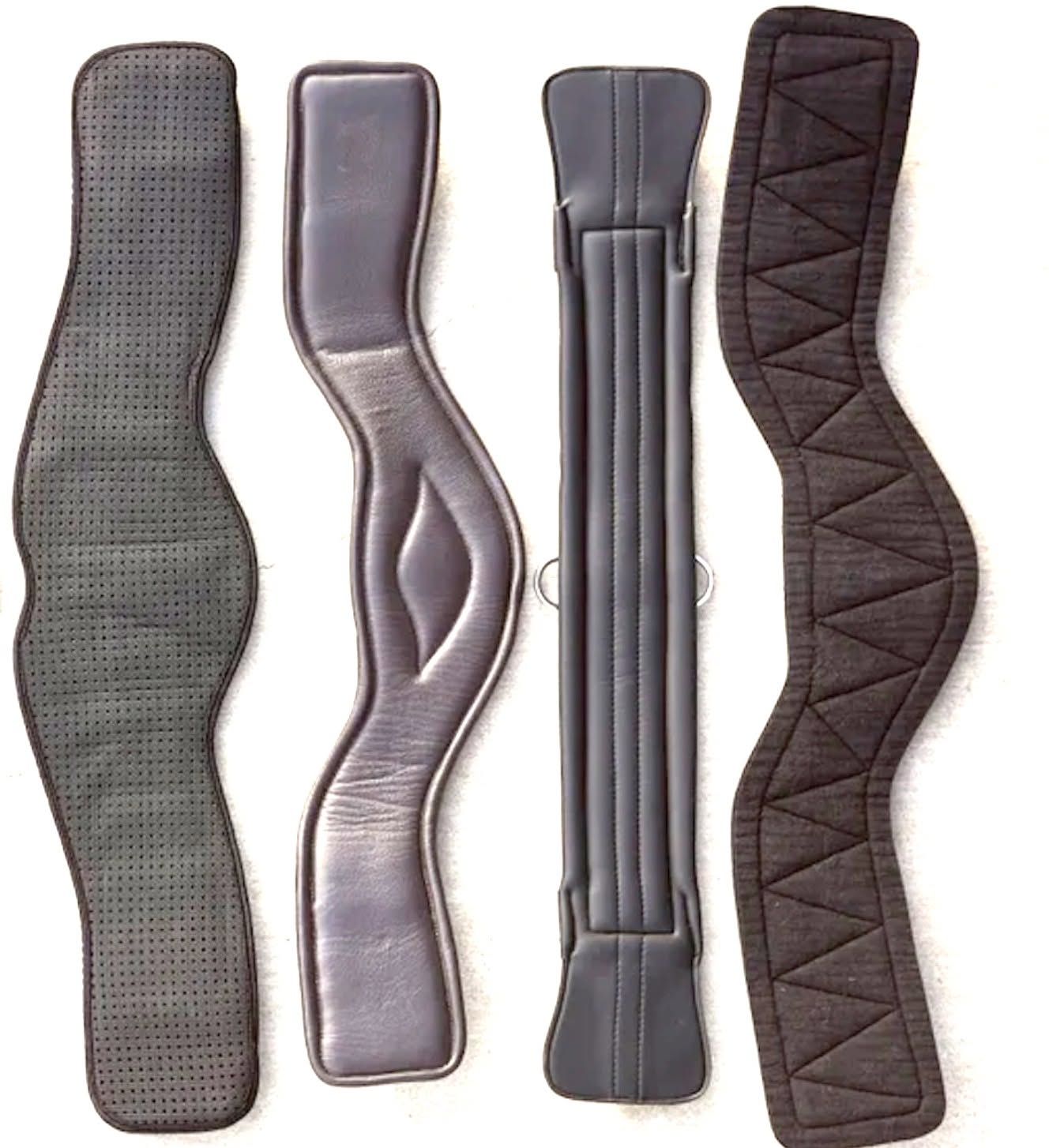
Marketing tells us: "Curved anatomical design follows the horse's natural shape and distributes pressure evenly!"
Reality tells us: Pressure doesn't follow curves. It follows straight lines.
The physics:
Pressure travels from point A to point B in the most direct route possible. It doesn't politely follow the curved contour of your "anatomical" girth.
Instead, it goes STRAIGHT through.
What this means:
When you have a CURVED anatomical girth, that straight-line pressure hits the EDGE of the curve.
All the pressure concentrates on that one edge.
Result? GREATER pressure in a smaller area. Exactly the opposite of what you wanted.
Compare it to a straight girth:
With a straight girth, that same pressure spreads across the entire contact surface evenly.
Pressure is distributed. It's not concentrated on edges.
Which one actually reduces pressure?
The straight girth wins. Every time.
Why the anatomical myth persists:
Because it SOUNDS right.
Curved = follows shape = must be better.
But physics doesn't care about marketing. Pressure travels in straight lines.
The real culprits of girth pressure problems:
 Girth placed wrong (too far forward or back)
Saddle balance creating uneven weight
Girth too tight (restricts breathing and movement)
Poor quality materials that don't distribute evenly
Wrong girth type for the horse's anatomy
What actually matters:
 Correct girth PLACEMENT
Proper girth TIGHTNESS (snug, not strangling)
Even saddle balance above it
Quality materials with good contact
The RIGHT WIDTH for your horse's girth groove
A well-placed, properly fitted STRAIGHT girth will outperform a fancy anatomical girth every time.
But what about those specialised girths?
Some anatomical designs DO work - but not because of the curve.
They work because:
They're positioned correctly
They use quality materials
They're the right width for that horse
The overall system (saddle + girth + fit) works together
Not because the curve magically distributes pressure.
Don't buy a girth because it LOOKS anatomical.
Buy one because:
It's the right width for your horse's groove
It's placed correctly (behind the elbow)
It's made of quality material
It works within a properly fitted saddle system
Physics wins. Every time.
I can help you find the right girth for YOUR horse (straight, curved, split - whatever works)
Don't fall for marketing. Follow the physics.