Health & Safety Policy
Last Updated January 2026
Policy Statement
The Fitted Horse is committed to ensuring the health, safety, and welfare of:
- Ourselves (business owner and any staff/contractors)
- Our clients
- Horses under our professional care during assessments
- Any other persons who may be affected by our business activities
We recognize that equine fitting services involve inherent risks associated with working with horses and operating on client premises. This policy outlines our commitment to managing these risks responsibly and maintaining safe working practices at all times.
We will achieve this by:
- Conducting risk assessments before and during all appointments
- Providing services with due care and professional competence
- Maintaining appropriate insurance coverage
- Following industry best practices and professional standards
- Communicating clearly with clients about safety requirements and responsibilities
- Refusing to work in unsafe conditions
- Continuously reviewing and improving our health and safety procedures
Our Health and Safety Commitment
We are committed to:
✅ Providing services in a manner that ensures the safety of all persons involved
✅ Conducting thorough risk assessments before and during all appointments
✅ Maintaining professional competence through training and development
✅ Using safe working practices and appropriate equipment
✅ Maintaining adequate insurance coverage
✅ Communicating clearly with clients about safety requirements and risks
✅ Refusing to work in unsafe conditions
✅ Reporting and learning from accidents and near-misses
✅ Complying with all relevant health and safety legislation
✅ Continuously reviewing and improving our safety procedures
Legal Compliance
This Health and Safety Policy complies with:
- Health and Safety at Work etc. Act 1974
- Management of Health and Safety at Work Regulations 1999
- Manual Handling Operations Regulations 1992
- Personal Protective Equipment at Work Regulations 1992
- Reporting of Injuries, Diseases and Dangerous Occurrences Regulations 2013 (RIDDOR)
- Employers’ Liability (Compulsory Insurance) Act 1969 (if applicable)
Responsibilities
The Fitted Horse Responsibilities
We are responsible for:
✅ Risk Assessment
- Conducting pre-visit risk assessments based on client information
- Performing on-site risk assessment upon arrival at each yard
- Continuously monitoring conditions during appointments
- Declining to work where unacceptable risks are identified
- Using the Yard Risk Assessment Checklist for every appointment
- Reviewing and updating risk assessments regularly
✅ Competence and Training
- Maintaining professional qualifications and competence in equine equipment fitting
- Undertaking continuing professional development (CPD)
- Staying current with industry best practices and safety standards
- Attending relevant safety training (equine first aid, manual handling, etc.)
- Understanding equine behaviour and welfare
- Knowing our limitations and referring to specialists when appropriate
✅ Safe Working Practices
- Using appropriate techniques when handling horses and equipment
- Maintaining safe positioning and awareness around horses at all times
- Following manual handling best practices (lifting, carrying equipment)
- Using personal protective equipment (PPE) where appropriate
- Keeping equipment clean, safe, well-maintained, and fit for purpose
- Not working under the influence of alcohol, drugs, or when unfit
- Managing fatigue through appropriate scheduling and breaks
✅ Insurance Coverage
- Maintaining public liability insurance
- Maintaining product liability insurance (where applicable)
- Providing proof of insurance on request
- Maintaining employer's liability insurance if employing staff
- Ensuring insurance coverage is current and appropriate for activities
✅ Communication and Information
- Clearly communicating safety requirements to clients before appointments
- Explaining risks and safety procedures during appointments
- Immediately alerting clients to any safety concerns identified
- Requesting essential information about horses, behaviour, and facilities
- Providing clients with information about their safety responsibilities
- Providing safety briefings where appropriate
✅ Equipment Safety
- Ensuring all equipment used is safe and fit for purpose
- Maintaining trial equipment in good, clean condition
- Inspecting equipment regularly for safety (wear, damage, sharp edges)
- Only recommending safe, appropriate equipment for each horse
- Removing unsafe equipment from use immediately
- Keeping vehicle and transport equipment maintained and roadworthy
✅ Incident Management
- Complying with RIDDOR reporting requirements where applicable
- Carrying appropriate first aid kit in vehicle
- Holding current first aid qualification (or working toward obtaining one)
- Recording all accidents, incidents, and near-misses
- Reporting serious incidents under RIDDOR where required
- Investigating incidents to identify causes and prevent recurrence
- Learning from incidents to improve safety practices and prevent recurrence
- Maintaining accident/incident records securely for required period
✅ Emergency Preparedness
- Having emergency contact information readily available
- Knowing location of nearest A&E hospitals in working areas
- Carrying charged mobile phone at all times
- Informing emergency contact of appointment locations (lone working)
- Having emergency action plan for serious incidents
Client Responsibilities
Clients have important health and safety responsibilities to ensure safe working conditions
Pre-Appointment Disclosure
Clients must provide accurate information about:
✅ Horse Information:
- Temperament, behaviour, and handling characteristics
- Any known vices (kicking, biting, barging, rearing, striking)
- Aggressive, dangerous or extremely nervous behaviour
- Current health status (lameness, injuries, illness)
- Recent veterinary treatment or medication (including sedation)
- Previous traumatic experiences affecting behaviour
- Handling difficulties or special requirements
- Any health issues that may affect the horse's behaviour
✅ Facilities Information:
- Describing the facilities available (lighting, working area, etc.)
- Notifying us of any site hazards (uneven ground, loose dogs, etc.)
- Available working area and surface type
- Lighting available (especially for evening appointments)
- Access and parking arrangements
- Other animals on site
- Emergency contact information
Failure to disclose relevant information may result in:
- Appointment being stopped on safety grounds
- No refund of fees
- Future appointments being declined
Safe Environment
Clients must provide:
✅ Suitable Working Area:
- Safe, level, non-slip surface for assessment
- Adequate space for fitting work and horse movement
- Good lighting (natural daylight or adequate artificial lighting)
- Shelter from extreme weather where possible
- Clear area free from hazards (tools, equipment, debris, holes)
✅ Site Safety:
- Other animals secured or separated (dogs, loose horses, livestock)
- Vehicles and machinery not operating in work area
- Safe access and egress for emergency situations
- Hazards identified and communicated (electric fences, dangerous areas)
- Warning of any site-specific risks
✅ Horse Preparation:
- Horse caught, groomed clean (especially head and back for fitting), and ready
- Horse appropriately tied or held by competent person
- Horse in suitable condition for assessment (not lame, injured, or distressed)
- Tack available if needed for assessment
✅ Assistance:
- Competent person available to hold/handle horse throughout appointment
- Client or designated handler present for entire appointment
- Handler able to control horse safely
- Additional assistance available if needed for safety
✅ Emergency Preparedness:
- Emergency contact details provided
- Mobile phone signal or alternative communication available
- Knowledge of nearest A&E hospital location
- Equine first aid kit available (recommended)
Shared Responsibilities
Both The Fitted Horse and clients share responsibility for:
🤝 Communication: Clear, honest communication about risks and concerns
🤝 Cooperation: Working together to maintain safe conditions
🤝 Vigilance: Monitoring horse behaviour and environmental conditions
🤝 Stopping Work: Immediately stopping if unsafe situation develops
🤝 Incident Response: Appropriate action if accident or incident occurs
Hazard Identification and Risk Assessment
Horse-Related Hazards
We have identified the following categories of hazards associated with equine equipment fitting services:
Hazard: Unpredictable equine behaviour causing injury
Risks:
- Kicks to any part of body (potential for serious injury or death)
- Bites (lacerations, bruising, crushing)
- Crushing against walls, fences, or other structures
- Striking with front legs
- Barging, pushing, or knocking over
- Rearing or sudden vertical movements
- Treading on feet
- Head butting or sudden head movements
- Spooking and sudden lateral movement Kicks, bites, crushing, striking, rearing
- Sudden movements or spooking
- Unpredictable behaviour
- Aggressive or nervous horses
- Ill, injured, or distressed horses
- Horses under influence of sedation or medication
Risk Factors Increasing Likelihood:
- Unknown or unfamiliar horses
- Nervous, anxious, or fearful horses
- Horses with known aggressive tendencies
- Young, inexperienced, or unhandled horses
- Horses in pain, discomfort, or ill health
- Stallions or horses in season
- Horses affected by medication or sedation
- Poor handling or incompetent handlers
- Unsuitable environment causing stress
Control Measures:
- Pre-appointment horse behaviour assessment
- Observing horse before approaching
- Maintaining safe position at shoulder (not directly front/behind)
- Clear escape route always identified
- Working with competent handler controlling horse
- Stopping work if horse shows dangerous behaviour
- Using calm, quiet approach and clear communication
Environmental Hazards
Hazard: Unsafe working environment causing slips, trips, falls, or other injuries
Risks:
- Slipping on wet, muddy, or icy surfaces
- Tripping over equipment, uneven ground, or obstacles
- Falling due to unstable surface
- Injuries from poor lighting (especially winter months/indoor facilities)
- Exposure to extreme weather (heat, cold, rain, wind)
- Working in confined or cramped spaces
- Collision with structures, fences, or equipment
- Site hazards (machinery, vehicles, other animals)
- Inadequate working facilities
Risk Factors:
- Outdoor yards in wet/winter conditions
- Poor yard maintenance
- Inadequate lighting in indoor facilities or evening appointments
- Cluttered work areas
- Extreme weather conditions
- Poorly maintained surfaces
Control Measures:
- Pre-visit assessment of facilities
- On-site inspection before commencing work
- Requesting suitable working area from client
- Wearing appropriate footwear (non-slip, protective)
- Using additional lighting if necessary
- Rescheduling in extreme weather conditions
- Keeping work area tidy and organized
- Declining to work in unsuitable conditions
Manual Handling Hazards
Hazard: Lifting, carrying, and manoeuvring equipment causing musculoskeletal injuries
Risks:
- Back injuries from lifting heavy saddles
- Shoulder, neck, or arm strain from carrying equipment
- Repetitive strain injuries from frequent lifting
- Acute injury from sudden movements or awkward lifts
- Cumulative injury from poor technique over time
- Dropping equipment causing foot/toe injuries
Heavy Items:
- Saddles (varying weights, some very heavy)
- Trial equipment cases
- Saddle stands and equipment
- Multiple items carried simultaneously
Control Measures:
- Using proper manual handling techniques (bend knees, keep back straight)
- Requesting assistance for heavy items
- Using equipment on trolleys or wheeled cases where possible
- Taking breaks between heavy lifts
- Limiting number of appointments per day to manage fatigue
- Strengthening exercises and fitness maintenance
- Not attempting lifts beyond capability
- Using saddle stands appropriately positioned
Equipment-Related Hazards
Hazard: Equipment causing injury through sharp edges, poor condition, or misuse
Risks:
- Cuts or lacerations from sharp bit edges or broken equipment
- Puncture wounds from pointed components
- Injuries from equipment falling or being dropped
- Tripping over equipment left on ground
- Eye injuries from springs or moving parts
- Injuries from faulty or damaged equipment
- Manual handling (carrying saddles, heavy equipment)
- Trial equipment becoming damaged or unsafe
Control Measures:
- Regular inspection of all equipment before use
- Running fingers along bits to check for sharp edges or damage
- Immediate removal of damaged equipment from use
- Organizing equipment safely during appointments
- Not leaving equipment where horse could step on it
- Proper maintenance and cleaning routines
- Replacing worn or unsafe equipment promptly
- Safe storage and transport of equipment
Personal Safety and Lone Working Hazards
Hazard: Working alone at remote or isolated locations
Risks:
- Delayed emergency response if incident occurs
- No immediate assistance available
- Personal safety risks at unfamiliar locations
- Communication difficulties in poor signal areas
- Becoming incapacitated without anyone aware
- Lone working at isolated locations
- Allergic reactions (hay, dust, horses)
- Zoonotic diseases
- Musculoskeletal injuries (bending, lifting, repetitive work)
- Travel risks (driving to appointments)
Control Measures:
- Sharing appointment schedule with emergency contact
- Checking in with emergency contact before/after appointments
- Carrying charged mobile phone at all times
- Having emergency ICE (In Case of Emergency) contact in phone
- Obtaining postcode/what3words location for each yard
- Ensuring someone knows expected return time
- Not working at locations that feel unsafe
- Trusting instincts about personal safety
Vehicle and Travel Hazards
Hazard: Road traffic accidents and vehicle-related incidents
Risks:
- Road traffic collisions
- Vehicle breakdown in isolated areas
- Fatigue from extensive driving
- Loading/unloading injuries
- Weather-related driving hazards
Control Measures:
- Maintaining vehicle in roadworthy condition
- Regular servicing and safety checks
- Appropriate insurance coverage
- Planning routes and allowing adequate travel time
- Taking breaks on long journeys
- Not driving when fatigued
- Carrying breakdown coverage
- Checking weather conditions before traveling
- Postponing appointments in dangerous weather
Health Hazards
Hazard: Exposure to allergens, zoonotic diseases, and other health risks
Risks:
- Allergic reactions to horses, hay, dust, or bedding
- Zoonotic diseases (ringworm, leptospirosis, etc.)
- Respiratory issues from dust or poor air quality
- Bites or stings from insects
- Tetanus from cuts/punctures in farm environment
- Heat stress or cold stress from weather exposure
- Fatigue and exhaustion
Control Measures:
- Maintaining up-to-date tetanus vaccination
- Washing hands after horse contact and before eating
- Using hand sanitizer when washing facilities unavailable
- Wearing appropriate clothing for weather conditions
- Taking breaks and maintaining hydration
- Managing appointment scheduling to prevent fatigue
- Seeking medical attention promptly if injury or illness occurs
- Awareness of allergies and managing exposure
Site-Specific Hazards
Hazard: Hazards specific to equestrian facilities and farms
Risks:
- Electric fences and electrical hazards
- Agricultural machinery and vehicles
- Farm chemicals and substances (COSHH)
- Livestock other than horses (cattle, sheep, pigs)
- Slurry pits and other dangerous areas
- Multiple horses loose or in adjacent areas
- Dogs and other animals
- Farm equipment
- Livestock other than horses
- Public access/footpaths through yards
- Inadequate emergency access
Control Measures:
- Asking about site hazards during pre-visit communication
- Conducting site walk-around on arrival
- Requesting hazards be identified by client
- Avoiding working near operating machinery
- Ensuring other animals are secured
- Being aware of electric fences and avoiding contact
- Requesting safe access routes
- Declining to work in proximity to uncontrolled hazards
Risk Control Measures
Before Each Appointment
Pre-Visit Communication:
- Send client questionnaire covering:
- Horse temperament and behaviour
- Known vices or issues
- Current health status
- Facilities available
- Any site-specific hazards
- Assess suitability based on information received
- Request changes to appointment conditions if necessary
- Decline appointments where risk appears unacceptable
Pre-Visit Preparation:
- Check weather forecast
- Plan route and share location with emergency contact (lone working)
- Ensure mobile phone charged
- Check vehicle and equipment condition
- Bring appropriate PPE and first aid kit
On Arrival at Yard
Arriving at Appointment
Procedure:
- Park vehicle safely, not blocking access routes
- Gather necessary equipment, avoid overloading carry
- Announce arrival to client
- Conduct site walk-around and complete Yard Risk Assessment Checklist
- Introduce yourself to horse from safe distance, observe demeanour
- Discuss any concerns with client before commencing
- Establish clear communication with handler
- Identify and agree on working area
- Confirm emergency procedures and contact information
- Only proceed when satisfied conditions are safe
Site Risk Assessment:
- Complete Yard Risk Assessment Checklist
- Visually assess working area
- Identify escape routes
- Note hazards and control measures needed
- Communicate any concerns to client immediately
- Decline to proceed if conditions unsafe
If Conditions Unsafe:
- Clearly explain concerns to client
- Request necessary changes/improvements
- If unable to achieve acceptable safety, politely decline and reschedule
- No refund required if client has not provided safe conditions as requested
During Appointments
Initial Assessment:
- Observe horse's demeanour before approaching
- Ask handler about horse's current state
- Assess handler's competence
- Establish clear communication with handler
Working Around Horses
Safe Positioning:
- Work at horse's shoulder whenever possible
- Maintain awareness of horse's body language at all times
- Keep clear escape route identified
- Avoid standing directly in front of or behind horse
- Never position yourself between horse and wall/solid object
- Keep weight balanced, ready to move quickly if needed
Body Language Awareness: Watch for warning signs:
- Ears pinned back (aggression/annoyance)
- Raised head, wide eyes (fear/alarm)
- Tail swishing rapidly (irritation)
- Weight shifted to back legs (preparing to kick)
- Tensing muscles
- Turning head toward you with mouth open (preparing to bite)
If Warning Signs Observed:
- Stop work immediately
- Step back to safe distance
- Alert handler
- Assess whether safe to continue
- Modify approach or stop appointment if necessary
Fitting Bridles and Bits
Specific Hazards:
- Head shy horses may react unpredictably
- Sudden head movements can cause injury
- Risk of fingers being trapped
- Bit may strike teeth or jaw causing horse reaction
Safe Procedure:
- Ensure handler has secure control of horse
- Stand to side, never directly in front
- Approach calmly, allow horse to see equipment
- Use slow, deliberate movements
- Communicate with handler before adjusting headpiece
- Keep fingers clear of horse's mouth when inserting bit
- Be prepared for head movement, don't force compliance
- If horse resistant, stop and reassess approach
- Never punish or become impatient with horse
- If horse consistently resists, stop and discuss with client (may indicate pain/fear)
Saddle Fitting
Manual Handling:
- Assess saddle weight before lifting
- Request assistance if saddle very heavy
- Use proper lifting technique:
- Bend knees, keep back straight
- Hold saddle close to body
- Lift with legs, not back
- Avoid twisting while carrying
- Position saddle stand at appropriate height
- Don't attempt to hold heavy saddle in position for extended time
Placing Saddle on Horse:
- Ensure handler has control
- Approach from near side
- Lift saddle to appropriate height before approaching
- Place gently, don't drop onto horse's back
- Stand clear of kick zone
- Observe horse reaction
- If horse objects, remove and reassess
Manual Handling - General
Principles:
- Assess: Evaluate weight and size before lifting
- Plan: Determine best approach and route
- Position: Feet shoulder-width apart, stable base
- Grip: Secure hold, not fingers only
- Lift: Bend knees, keep back straight, lift with legs
- Carry: Keep load close to body, look where going
- Lower: Reverse of lifting, controlled descent
Know Your Limits:
- Don't attempt lifts beyond capability
- Request assistance when needed
- Use equipment (trolleys, stands) where possible
- Take breaks between heavy lifts
3 Stage Risk Assessment
Stage 1: Pre-Visit Assessment
- Conducted during booking process
- Based on client questionnaire responses
- Identifies known hazards before arrival
- Determines if appointment is appropriate
- Decision point: Proceed, request changes, or decline
Stage 2: On-Site Assessment
- Conducted immediately upon arrival at yard
- Uses Yard Risk Assessment Checklist (see Section 7)
- Visual inspection of facilities and environment
- Assessment of horse's demeanour
- Decision point: Proceed, modify approach, or decline
Stage 3: Continuous Monitoring
- Ongoing throughout appointment
- Watching horse behaviour continuously
- Monitoring environmental conditions
- Reassessing if situations change
- Decision point: Continue, modify, pause, or stop
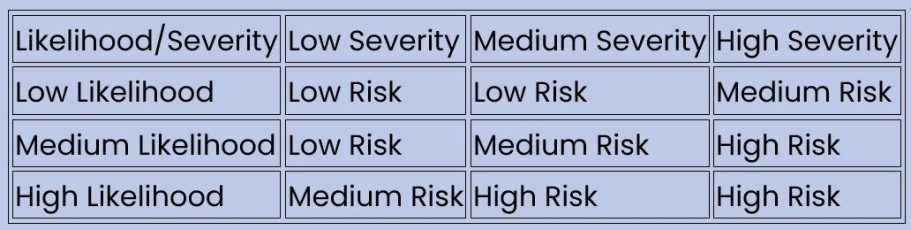
Risk Assessment Decision Making
For each identified hazard, we assess:
- Likelihood - How likely is the hazard to cause harm?
- Low: Unlikely to occur
- Medium: Could occur occasionally
- High: Likely to occur
- Severity - How serious would the harm be?
- Low: Minor injury (bruise, small cut)
- Medium: Moderate injury (requiring medical attention)
- High: Serious injury (fracture, concussion, hospitalization)
- Overall Risk Level - Combination of likelihood and severity
- Low Risk: Acceptable with current controls
- Medium Risk: Acceptable with enhanced controls
- High Risk: Not acceptable - decline or stop work
- Risk Matrix:
Decision Guide:
- Low Risk: Proceed with standard controls
- Medium Risk: Proceed with enhanced controls and heightened awareness
- High Risk: Do not proceed or stop work immediately
Personal Protective Equipment (PPE)
Mandatory PPE:
- Sturdy footwear: Boots or shoes with non-slip soles, closed toe, ankle support
- Must be worn at all appointments
- No sandals, flip-flops, or open-toed shoes
- Steel toe caps recommended but not mandatory
Recommended PPE:
- ☑ Gloves: When handling equipment with potential sharp edges
- ☑ Body protector: When working with known dangerous horses (rare, usually decline instead)
- ☑ Hi-vis vest: When working near roadways or in poor visibility
Seasonal PPE:
- Waterproof coat in wet weather
- Warm clothing in cold weather (maintaining dexterity)
- Sun protection in hot weather (hat, sunscreen)
PPE Maintenance:
- Keep PPE clean and in good condition
- Replace worn or damaged items
- Ensure PPE fits properly and doesn't impair movement
Equipment Safety
Before Each Appointment:
- Inspect all equipment for damage, wear, or sharp edges
- Run fingers along bits to check for roughness
- Check joints, links, and moving parts function correctly
- Ensure trial equipment is clean and safe
- Remove any damaged items from use
During Appointments:
- Organize equipment safely, not where horse can step on it
- Don't leave sharp items on ground
- Keep work area tidy
- Handle bits carefully to avoid injury to self or horse
- Use saddle stands appropriately
After Appointments:
- Check equipment for damage caused during use
- Clean equipment properly
- Report and replace any damaged items
- Store equipment safely in vehicle
Declining or Stopping Work
We Will Decline or Stop Work If:
❌ Horse Factors:
- Horse behaving dangerously (aggressive, extremely nervous, uncontrollable)
- Horse visibly lame, injured, or in distress
- Horse clearly in pain or discomfort
- Horse under sedation without prior disclosure
- Horse's behaviour deteriorates during appointment
❌ Handler Factors:
- No competent handler available
- Handler unable to control horse safely
- Handler becomes injured or unwell
- Handler requests we stop
❌ Environmental Factors:
- Working area unsafe (very slippery, dangerous obstacles)
- Lighting inadequate for safe work
- Weather conditions dangerous (lightning, extreme wind)
- Site hazards cannot be controlled (operating machinery, loose dogs)
- Emergency access blocked
❌ Other Factors:
- Client has misrepresented horse or conditions
- We feel personally unsafe
- Unforeseen circumstances arise
Procedure When Declining/Stopping:
- Clearly explain reason to client
- Ensure safety of all persons and horse
- Offer to reschedule when conditions improved (if appropriate)
- Document reason in records
- No refund required if unsafe conditions were not disclosed or were client's responsibility
Client has right to disagree but we have absolute right to decline work on safety grounds.
Incident Management
First Aid Provision
The Fitted Horse Carries:
- Comprehensive first aid kit in vehicle
- Updated annually, items replaced as used
- Mobile phone for emergency calls
- Emergency contact information
First Aid Kit Contents (Minimum):
- Sterile wound dressings (various sizes)
- Sterile eye pads
- Triangular bandages
- Safety pins
- Disposable gloves
- Antiseptic wipes
- Plasters (various sizes)
- Microporous tape
- Scissors
- Tweezers
- Burn gel/dressings
- Emergency foil blanket
- First aid guidance leaflet
First Aid Training:
- Commitment to obtaining/maintaining first aid qualification
- Current knowledge of basic first aid
- Understanding of when to call emergency services
Accident and Incident Response
In the Event of an Accident or Incident:
Immediate Actions:
- Ensure Safety
- Make area safe
- Prevent further harm
- Move to safe location if necessary
- Assess Situation
- Check for injuries
- Determine severity
- Identify what happened
- Provide First Aid
- Administer appropriate first aid within competence
- Reassure injured person
- Do not move seriously injured person unless immediate danger
- Call for Help
- 999/112 for emergencies (serious injury, unconsciousness, suspected fracture, head injury, chest pain, severe bleeding)
- Request ambulance and give clear location information
- Stay on line and follow dispatcher instructions
- Send someone to guide ambulance if location difficult to find
- Notify
- Client/yard owner
- Emergency contact (if injured person not client)
- Our emergency contact
- Insurance company (if required)
- Do Not
- Leave injured person alone (unless to call for help)
- Move seriously injured person
- Give food or drink if serious injury
- Admit fault or liability at scene
Recording Accidents and Incidents
ALL accidents and incidents must be recorded, including:
- Accidents causing injury (however minor)
- Near-misses (incidents that could have caused injury)
- Dangerous occurrences
- Unsafe conditions identified
- Incidents involving horses, equipment, or environmental factors
Accident/Incident Report Must Include:
✅ Date, time, and location
✅ Persons involved (names, contact details)
✅ Description of what happened
✅ Injuries sustained
✅ First aid provided
✅ Witnesses (names, contact details)
✅ Contributing factors
✅ Immediate actions taken
✅ Photos if appropriate and possible
✅ Follow-up actions required
Reporting Timeline:
- Record as soon as possible after incident (ideally same day)
- Serious incidents recorded immediately
- Reports kept securely for minimum 3 years
RIDDOR Reporting
The Reporting of Injuries, Diseases and Dangerous Occurrences Regulations 2013 (RIDDOR) requires reporting of:
Work-related accidents resulting in:
- Death
- Specified serious injuries (fractures, amputations, serious burns, loss of consciousness, etc.)
- Injuries resulting in over 7 days absence from work
- Occupational diseases
- Dangerous occurrences
Our Obligations:
- Report to Health and Safety Executive (HSE) within required timeframe
- Keep records of reportable incidents for 3 years
- Cooperate with any HSE investigation
How to Report:
- Online: www.hse.gov.uk/riddor
- Telephone: 0345 300 9923
- Deaths and specified injuries: Report immediately
- Over 7-day injuries: Report within 15 days
Note: RIDDOR applies to self-employed persons for specified injuries/dangerous occurrences
Learning from Incidents
After Any Incident:
- Investigate - What happened and why?
- Identify Root Cause - What were contributing factors?
- Assess Controls - Were existing controls adequate?
- Implement Changes - What needs to change to prevent recurrence?
- Review Policy - Does this policy need updating?
- Communicate - Share learnings (where appropriate)
Incident Review:
- Conducted for all accidents and significant near-misses
- Root cause analysis performed
- Action plan created and implemented
- Follow-up to ensure actions completed
- Changes documented
We view incidents as learning opportunities to improve safety.
Specific Safety Procedures
Lone Working
As a sole trader often working alone at client premises, lone working procedures are essential:
Before Each Appointment:
- Share full schedule with emergency contact (name, location, time)
- Provide postcode and what3words location for each yard
- Agree check-in times with emergency contact
- Ensure mobile phone fully charged
During Appointments:
- Keep mobile phone on person and accessible
- Check in with emergency contact if running significantly late
- Trust instincts - if location feels unsafe, leave
- Park vehicle for easy exit if needed
After Appointments:
- Confirm safe completion with emergency contact
- Report any concerns about locations or clients
Emergency Contact Responsibilities:
- Expect check-ins at agreed times
- Raise alarm if significantly overdue without contact
- Have emergency contact numbers (999, our mobile, client contact)
- Know locations of appointments
If Something Feels Wrong:
- Leave immediately
- Safety comes before commercial considerations
- Report to emergency contact
- Consider whether future appointments at location appropriate
Extreme Weather
Hot Weather Procedures:
- Carry water and stay hydrated
- Wear sun protection (hat, sunscreen)
- Take breaks in shade
- Watch for heat exhaustion (dizziness, nausea, confusion)
- Limit duration of appointments in extreme heat
- Reschedule if heat poses risk to health
Cold Weather Procedures:
- Wear appropriate warm clothing (maintaining dexterity)
- Take warm breaks
- Watch for hypothermia symptoms
- Ensure adequate lighting in shorter daylight hours
- Be cautious of ice and frost
Wet Weather Procedures:
- Wear waterproof clothing and non-slip footwear
- Extra caution on slippery surfaces
- Request covered area if possible
- Consider rescheduling if conditions dangerous
Severe Weather:
- Monitor weather forecasts before traveling
- Do not travel in dangerous conditions (snow, ice, flooding, severe storms)
- Reschedule appointments if severe weather forecast
- Client safety and our safety outweigh commercial considerations
Vehicle Safety
Vehicle Maintenance:
- Regular servicing according to manufacturer schedule
- MOT and insurance current
- Tires, brakes, lights checked regularly
- Breakdown cover maintained
- Emergency equipment carried (warning triangle, hi-vis vest, torch)
Driving Safety:
- Plan routes and allow adequate time
- Take breaks on long journeys (minimum 15 minutes every 2 hours)
- Never drive when fatigued
- Adjust driving for weather and road conditions
- Avoid using phone while driving (pull over if necessary)
Loading/Unloading:
- Use proper manual handling techniques
- Don't overload vehicle
- Secure equipment to prevent shifting during travel
- Be aware of surroundings when opening vehicle in yards (horses, vehicles)
Infection Control and Hygiene
Between Appointments:
- Wash hands with soap and water or use hand sanitizer
- Clean equipment between horses (especially bits)
- Avoid touching face before washing hands
After Appointments:
- Wash hands before eating or drinking
- Clean equipment thoroughly before next use
- Launder clothing regularly
If Infection Suspected:
- Be aware of zoonotic disease signs (ringworm, etc.)
- Clean equipment thoroughly if exposed to infection
- Seek medical advice if symptoms develop
- Inform clients if we identify potential infection risk
Tetanus Protection:
- Maintain up-to-date tetanus vaccination
- Seek medical attention promptly for any puncture wounds or cuts
Insurance
Current Insurance Coverage
The Fitted Horse maintains the following insurance:
Public Liability Insurance:
- Coverage: £5,000,000 minimum
- Covers: Injury to third parties, damage to third party property
- Provider: NFU Mutual
- Policy Number: 080X9442202/N71
- Renewal Date: 6th January 2027
Product Liability Insurance:
- Coverage: Included in public liability
- Covers: Claims arising from products sold
Business/Commercial Vehicle Insurance:
- Coverage: Business use, goods in transit
- Provider: SEIB
- Policy Number: HAEY05HB01
- Renewal Date: 8th December 2026
Insurance Management
Responsibilities:
- Maintain adequate coverage at all times
- Renew policies before expiry
- Notify insurers of any changes to business activities
- Provide proof of insurance to clients on request
- Report all potential claims to insurers promptly
- Maintain copies of insurance certificates
- Review coverage annually to ensure adequacy
Proof of Insurance:
- Current certificates available on request
- Summary of coverage provided to clients if requested
- Insurance details included in Terms and Conditions
Training and Competence
Professional Qualifications and Training
Current Qualifications:
- WOW Saddle Fitter & Retailer Training
Commitment to CPD (Continuing Professional Development):
- Minimum 40 hours CPD per year
- Attendance at manufacturer training courses
- Industry seminars and conferences
- Self-directed learning and research
- Professional membership requirements met
CPD Record Keeping:
- All CPD activities documented
- Certificates retained
- Learning outcomes recorded
- CPD log maintained
Health and Safety Training
Completed/Planned Training:
Essential:
☐ First Aid at Work or Emergency First Aid at Work
☐ Manual Handling
☐ Risk Assessment
☐ Equine Behaviour and Welfare
Desirable:
☐ Fire Safety Awareness
☐ Lone Working Safety
☐ COSHH Awareness (if handling cleaning chemicals)
Training Refresh:
- First Aid: Every 3 years
- Manual Handling: Every 3 years
- Risk Assessment: As needed when regulations change
- Other training: Reviewed annually
Competence Assessment
Self-Assessment:
- Regular reflection on skills and knowledge
- Identifying gaps and training needs
- Seeking mentorship or peer review where appropriate
- Maintaining awareness of industry developments
Professional Standards:
- Working within scope of competence
- Referring to specialists when appropriate (vets, saddlers, trainers)
- Not attempting work beyond qualifications
- Honest about limitations
Policy Review and Updates
Review Schedule
This Health and Safety Policy will be reviewed:
- Annually: Full policy review in January each year
- Following Incidents: Any serious accident or near-miss triggers immediate review
- Following Changes
- Changes in legislation
- Changes in business activities
- Introduction of new equipment or services
- Changes in working practices
- Feedback from clients or incidents
- Changes in insurance requirements
Update Process
Review includes:
- Assessing effectiveness of current policy
- Reviewing accident/incident records
- Identifying any gaps or weaknesses
- Checking compliance with current legislation
- Incorporating lessons learned
- Updating risk assessments
- Revising procedures as needed
Communication:
- Updated policy communicated to any staff/contractors
- Clients informed of significant changes
- Updated version available on website
- Date of revision clearly marked
Continuous Improvement
We are committed to:
- Learning from experience
- Staying current with best practice
- Responding to feedback
- Evolving procedures as needed
- Maintaining high safety standards
Feedback Welcome:
- Clients encouraged to raise safety concerns
- Suggestions for improvement welcomed
- No penalization for reporting safety issues
- Open culture around health and safety
Emergency Contacts
Emergency Services
Immediate Emergency: 999 or 112
Non-Emergency:
- Police: 101
- NHS 24-hour advice: 111
The Fitted Horse Emergency Contact
Primary Contact (Business Owner):
- Emma Harris
- Mobile: 07359 205538
Other Important Contacts
Emergency Contact Person:
- Name: Ian Bankhurst
- Relationship: Partner
- Mobile: 07799 212520
Purpose: If fitter is injured/incapacitated, emergency contact can:
- Notify scheduled clients of cancellations
- Access appointment diary
- Coordinate emergency response
Insurance Company:
- Public/Professional Liability: 080X9442202/N71
Health and Safety Executive (HSE):
- General Enquiries: 0300 003 1747
- RIDDOR Reporting: 0345 300 9923
- Website: www.hse.gov.uk
Client Information and Communication
Pre-Appointment Information
All clients receive:
- Booking confirmation with appointment details
- Health and safety requirements
- Client responsibilities for safety
- Request for information about horse and facilities
- Emergency contact request
Client Questionnaire Includes:
- Horse behaviour and temperament
- Known vices or handling issues
- Current health status
- Facility description
- Site hazards
- Handler availability
Safety Briefing
On Arrival:
- Brief discussion of safety procedures
- Identification of emergency exits/procedures
- Clear communication about:
- What we'll be doing
- What we need from handler
- When to stop or alert us to concerns
- Horse's comfort and welfare signals
During Appointment:
- Continuous communication with handler
- Explaining actions before performing them
- Alerting to any concerns
- Instructing handler as needed
Monitoring and Compliance
Self-Monitoring
Daily:
- Pre-appointment safety checks
- On-site risk assessments
- Continuous monitoring during work
Weekly:
- Equipment inspection and maintenance
- Vehicle checks
- Review of near-misses or concerns
Monthly:
- Review accident/incident log
- Check insurance coverage current
- Review upcoming appointments for special considerations
Annually:
- Full policy review
- CPD assessment
- Training needs analysis
- Insurance renewal
- Equipment replacement needs
Record Keeping
Records Maintained:
- Yard Risk Assessment Checklists (all appointments)
- Accident and incident reports
- CPD log and certificates
- Insurance certificates and correspondence
- Equipment inspection records
- Policy reviews and updates
- RIDDOR reports (if applicable)
Retention Periods:
- Risk assessments: 3 years minimum
- Accident reports: 3 years minimum (longer for serious injuries)
- RIDDOR reports: 3 years
- Insurance documents: 6 years after expiry
- Training certificates: Permanently
- Policy versions: Previous 3 versions retained
Storage:
- Secure, confidential storage
- Backed up digitally
- Accessible for review/audit
- Compliant with GDPR
Declining Service on Safety Grounds
We reserve the right to refuse or discontinue service if:
❌ Horse is behaving dangerously
❌ Horse is showing clinical signs that need investigation by a relevant professional
Policy Communication and Availability
Access to Policy
This Health and Safety Policy is available:
- On The Fitted Horse website (www.thefittedhorse.co.uk)
- On request to clients
- Provided during booking process (summary)
- Discussed during appointments as relevant
Questions and Concerns
If you have questions about health and safety:
📧 Email: emma@thefittedhorse.co.uk
📱 Phone: 07359 205538
We welcome:
- Questions about safety procedures
- Reports of safety concerns
- Suggestions for improvement
- Feedback on safety practices
All safety concerns taken seriously and addressed promptly.
Declaration
The Fitted Horse declares:
✅ We are committed to health and safety as outlined in this policy
✅ We will comply with all relevant health and safety legislation
✅ We will conduct risk assessments for all activities
✅ We will maintain appropriate insurance coverage
✅ We will work safely and professionally at all times
✅ We will decline work where unacceptable risks exist
✅ We will continuously review and improve our safety practices
✅ The welfare of horses, clients, and ourselves is our priority
This policy represents our commitment to conducting business safely and responsibly.
Professional Equipment Fitting Services
Safety. Welfare. Excellence.
This Health and Safety Policy was last updated: January 2026
Next scheduled review: January 2027
This policy will be reviewed earlier if significant incidents occur or circumstances change.