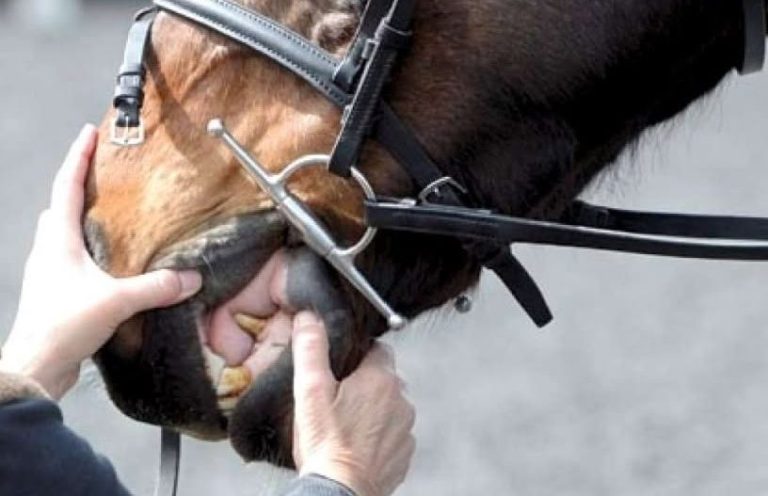
When a horse resists the bit, the instinctive explanations are often about behaviour or training: the horse is being difficult, or needs something stronger. Yet very often the real explanation is physical. The bit simply does not suit the shape of that particular horse's mouth.
Every horse's mouth is different. Tongue size, palate height, bar shape, mouth width and the space between the jaws all vary from one horse to the next, and those differences decide which bits can sit comfortably and which cannot.
Understanding the anatomy first makes choosing a bit far more straightforward.
The space inside the mouth
The bit lies across the tongue, in the gap between the upper and lower jaws. That space is limited. Above is the bony arch of the hard palate; below are the bars of the lower jaw, covered by only a thin layer of gum. Most of the room in between is taken up by the tongue.
A 2022 study of 554 horses and ponies, published in Frontiers in Veterinary Science, measured these dimensions under sedation. It found that horses had, on average, space for a bit about 14mm thick without compressing the tongue. It also found that oral dimensions varied by breed and sex — mares and ponies generally had smaller mouths — and that many horses were being ridden in bits that did not suit their measurements.
An average is only an average. Some horses have more room; many have less. That is why bit thickness should be chosen for the individual horse rather than on the assumption that thicker is automatically kinder.
Our article on bit width and thickness looks at this in more detail.
Tongue thickness
Some horses have thick, fleshy tongues; others have much thinner ones. A thick tongue fills more of the available space, leaving less room for the bit. Put a thick mouthpiece in that mouth and the tongue is compressed between the bit and the lower jaw every time the rein is taken up — and often even at rest.
A horse in that situation may struggle to swallow comfortably, hold tension through the jaw, retract the tongue, or try to put it over the bit to escape the pressure. These are frequently treated as training problems, when they are in fact the horse's response to a lack of space.
Horses with thicker tongues are often more comfortable in slimmer mouthpieces, and in designs shaped to follow the contour of the tongue rather than press flat across it. Some benefit from a degree of tongue relief — but only where the palate is high enough to accommodate it. A horse with a thinner tongue generally has more options, though it still needs a bit of the correct size and shape.
Palate height
The palate is the roof of the mouth: the hard palate at the front, over bone, and the softer palate further back. Its height varies considerably between horses, and it is a permanent feature of the horse's anatomy rather than something that changes with training.
A horse with a high palate has more vertical room, so it can usually accommodate a wider range of designs, including thicker mouthpieces and those with a raised centre or port. A horse with a low palate has very little room above the tongue, and that changes the picture considerably.
Why low palates need particular care
In a low-palate horse, any part of the mouthpiece that rises upwards can make contact with the roof of the mouth. The hard palate is covered by thin tissue over bone, and contact there is genuinely uncomfortable.
The designs most likely to cause problems are high ports, mouthpieces with significant raises in the centre, thick bits with a tall profile, and single-jointed snaffles, whose joint can rise towards the palate when the rein is taken up. Some double-jointed designs with a large or upright central link can do the same.
Low-palate horses tend to be more comfortable in flatter, lower-profile mouthpieces that follow the shape of the mouth: slimmer designs, gently curved mouthpieces, and double-jointed bits with a small, flat central link that lies on the tongue rather than standing up from it.
It is worth knowing that low-palate horses do not always object obviously. Many simply adapt and live with a degree of discomfort, showing only subtle signs such as tension, fussing or a slightly unsettled contact. It is often only when they are moved into a more suitable design that it becomes clear how much more comfortable they can be. This also applies to every type of bit, not just snaffles; a ported curb in a double bridle needs just as much consideration.
Bar width and sensitivity
The bars are where much of the bit's pressure lands, and they vary too. Some horses have broad, rounded bars with a little more soft tissue, and tend to be fairly tolerant of pressure. Others have narrow, sharp bars with very little covering, which bruise more easily and are far more sensitive.
Horses with sharp, sensitive bars generally do better in mouthpieces that spread pressure evenly across the bars rather than concentrating it at a single point, and in smooth designs without edges or texture. Single-jointed bits, which can concentrate pressure where the joint folds, may be less suitable. There is a balance to strike here: a slightly fuller mouthpiece spreads pressure better, but only if the tongue and palate leave room for it.
The width of the lower jaw also matters. The same study found that the length of a bit's central link should be considered alongside the width of the lower jaw, because a link of a similar length can create pressure points on the bars.
Putting the anatomy together
No single feature decides the right bit; it is the combination that matters. A horse might have a thick tongue but a high palate, giving room for a shaped mouthpiece with tongue relief. Another might have a thin tongue but a very low palate, needing a slim, flat design. A third might have plenty of space but very sensitive bars. Interestingly, the 2022 study found no correlation between tongue thickness and lower jaw width, which underlines that each feature needs assessing in its own right.
A professional bit fitting therefore looks at the whole mouth: mouth width, tongue thickness, palate height, bar shape and sensitivity, the interdental space, any asymmetry between the two sides, and the condition of the lips and corners of the mouth. Only then does it make sense to choose a design.
A note on what this does and does not mean
Anatomy tells us which bits can physically fit. It does not, on its own, tell us which bit a horse will prefer, and it does not replace watching how the horse responds in work. Within the range of designs that suit a horse's mouth, there is still room for individual preference.
And anatomy is only part of the picture. Dental health, bridle fit and riding all influence how comfortable a horse is in its bit. A horse that resists the contact deserves to have all of these considered before it is labelled difficult.
Key takeaways
✔ Tongue thickness, palate height and bar shape determine which bits can physically fit comfortably
✔ Research suggests horses have room for a bit around 14mm thick on average, but many individuals have less
✔ A thick tongue leaves less space for the bit, so a thick mouthpiece can compress it and cause tension
✔ Low-palate horses need flat, low-profile designs; ports, raised centres and single joints can press into the palate
✔ Sharp, sensitive bars need mouthpieces that spread pressure evenly rather than concentrating it
✔ Assess the whole mouth first, then choose a bit within those physical limits
Find out what your horse's mouth really needs
If your horse fusses with the bit, carries tension in the jaw or seems uncomfortable in the contact, its mouth anatomy may hold the answer.
The Fitted Horse's bit and bridle fitting consultations include a careful assessment of the tongue, palate, bars and mouth width, followed by trial of suitable designs so you can see how your horse responds.
Book a bit fitting consultation →
Further reading: Size matters: bit width and thickness | Understanding tongue pressure in horses | The complete guide to bit mouthpieces | Choosing the right bit for your horse | Understanding bit pressure | Oral dimensions related to bit size (Frontiers in Veterinary Science, 2022)