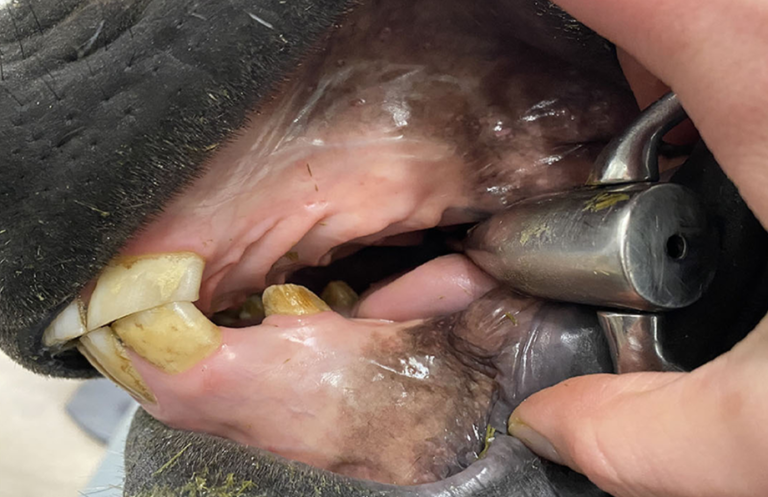
Interdental Space (The Bars):
Why Bit Positioning Matters
Most conversations about bit fit focus on width and thickness, and both matter. But before either can be judged, the bit has to be sitting in the right place. A well-chosen mouthpiece in the wrong position will still cause discomfort, because the pressure it applies is landing somewhere it was never meant to.
That place is the interdental space. Understanding where it is, and how much room your horse actually has there, is the foundation of every other bit-fitting decision.
What the interdental space is
A horse's teeth are not arranged in a continuous row. At the front of the mouth are the incisors, used for grazing. Further back are the premolars and molars, the cheek teeth used for grinding. Between the two is a gap along the lower jaw where there are no teeth at all. This gap is the interdental space, and the ridge of jawbone running through it, covered only by a thin layer of gum, is known as the bars.
The bit is designed to rest across the tongue and on these bars. Because there are no teeth in this zone, a correctly positioned bit can apply its pressure without contacting tooth surfaces.
Canines, wolf teeth and the boundaries of the space
The front boundary of the interdental space depends on whether your horse has canine teeth, sometimes called tushes. Most geldings and stallions have them; most mares do not, although some do. Where canines are present, they sit within the gap behind the incisors, and the bit needs to rest clear of them. Where they are absent, the toothless area begins just behind the incisors.
The rear boundary is the first cheek tooth. Some horses also have wolf teeth — small, often shallow-rooted teeth that sit immediately in front of the first upper cheek tooth, and occasionally the lower one. Wolf teeth are a common source of bit-related discomfort, because they sit close to where the bit can be drawn back when the rein is taken up. Their presence, and whether they should be removed, is a matter for your equine dentist or vet.
How much space is there?
The length of the interdental space varies considerably between horses, and it is not simply a matter of size. Some horses have a generous gap, giving the bit plenty of room to sit comfortably well clear of the teeth. Others have a shorter space, with the canines or cheek teeth closer together, leaving less margin for error.
The bars themselves also differ. Some horses have prominent, sharp bars with very little soft tissue covering them, and these are more easily bruised by pressure. Others have broader, more rounded bars that tolerate pressure more comfortably. Both the length of the space and the shape of the bars influence which mouthpieces will suit a horse.
What happens when the bit is in the wrong place
A bit that sits too far forward, or slides forward in use, can come into contact with the canines. A bit that is drawn too far back — by a contact that is too strong, or by the jointed action of the mouthpiece — can knock against the first cheek teeth or wolf teeth. In either case, pressure lands on teeth rather than on the tongue and bars where it belongs.
Horses rarely tolerate this quietly. Tooth interference can show itself as reluctance to accept the bridle, head tossing, opening the mouth, tilting the head, fussing with the bit, or a general unwillingness to take a contact. Because these behaviours have many possible causes, they are easily mistaken for a training issue, when the real problem is where the bit is sitting.
How bit position is set
The height of the bit in the mouth is set by the length of the cheekpieces. Too long, and the bit hangs low, can knock the canines and invites the tongue over the top. Too short, and it is pulled up into the corners of the lips and back towards the cheek teeth. The correct height places the bit on the bars, clear of the teeth in front and behind, with the lips lightly in contact but not stretched.
Position also depends on the bit itself. A mouthpiece that is too wide will slide from side to side and shift its position; one that is too thick may not fit comfortably in the available space at all. This is why width, thickness and position are always assessed together.
Checking your horse's bit position
With the bridle on and the horse standing quietly, gently lift the lips at the side of the mouth. You should be able to see the bit resting in the gap between the front teeth and the cheek teeth, with clear space in front of it and behind it. It should not be touching the canines, and it should not be pressed against the first cheek tooth.
It is also worth watching the bit when a light contact is taken up, as its position can change considerably under rein pressure. A bit that sits well at rest may be drawn back towards the cheek teeth as soon as the rider picks up the reins. If you see any tooth contact, or your horse shows discomfort when the bit is adjusted, it should be looked at before you continue riding.
Never put your fingers between the cheek teeth. The interdental space is the only safe place for a hand in a horse's mouth.
A note on what this does and does not mean
Checking bit position is not a dental examination. If you suspect wolf teeth, sharp edges or any other dental issue, your horse needs to be seen by a qualified equine dental technician (BAEDT) or vet. Bit fitting and dental care work hand in hand, and many horses that resist the bit improve markedly once both have been addressed.
Nor does a short interdental space mean a horse cannot be bitted comfortably. It simply means that bit choice and position need more care, and that a professional assessment is particularly worthwhile.
Key takeaways
✔ The bit should rest on the bars, in the toothless gap between the front teeth and the first cheek teeth
✔ Canines and wolf teeth mark the boundaries of the space, and the bit must sit clear of both
✔ The length of the interdental space and the shape of the bars vary from horse to horse
✔ A bit in the wrong place puts pressure on teeth, which often shows up as resistance or fussiness in the mouth
✔ Bit height is set by cheekpiece length, and position must be checked under contact as well as at rest
✔ Dental checks and bit fitting work together; suspected tooth problems need a dentist or vet
Is your horse's bit sitting where it should?
If your horse fusses with the bit, resists the contact or is reluctant to be bridled, the position of the bit is one of the first things worth checking.
The Fitted Horse offers bit and bridle fitting consultations that assess the mouth as a whole — interdental space, bars, tongue and palate — alongside the bit and bridle your horse currently wears.
Book a bit fitting consultation →
Further reading: Size matters: bit width and thickness | Why cheekpiece length and position are critical | The connection between dental care and bridle fit | How to measure your horse's mouth for a bit
A bit should be assessed under rein contact as well as at rest, because taking up the reins draws the bit back and up in the mouth, changes the angle of the rings and alters where the pressure lands. A bit that looks correct with the horse standing still can slide, pinch or tilt once it is actually in use. The Fitted Horse explains the difference between static and dynamic fit, what a good fit looks and feels like under contact, and the warning signs to look out for.
Last Updated October 2026