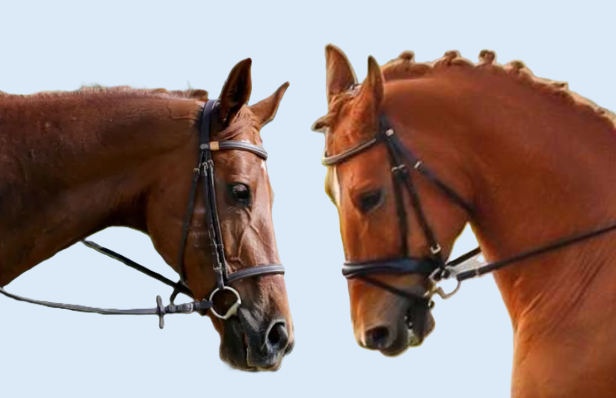
Most bit checks happen with the horse standing quietly in the stable or on the yard. The bridle goes on, the bit is checked for width and height, and if nothing looks wrong, it is judged to fit. Yet many riders then find that the bit does not feel quite right once they are on board, or that the horse fusses, tilts its head or resists the contact.
The reason is simple. A bit does its work under contact, not at rest, and the two situations are mechanically very different.
Static fit and dynamic fit
Static fit is how the bit sits with no rein tension, no movement and the head held still. It is the foundation of any assessment: if the width, height and position are wrong at rest, nothing will improve once the reins are taken up.
Dynamic fit is how the bit behaves once it is in use. Rein tension draws the mouthpiece backwards and upwards towards the corners of the mouth. The jaw moves as the horse chews and swallows. The head carriage changes with each gait and transition, which alters the angle of the cheekpieces and the line of the rein. Each of these can change the bit's height, the way the mouthpiece lies across the tongue and bars, and the position of the rings against the lips.
A bit that fits perfectly at rest can therefore fit quite differently in work. And a bit that is already slightly wrong at rest will almost always become more wrong under contact.
How cheekpiece design affects movement
The type of cheekpiece has a large influence on dynamic fit. A loose ring allows the mouthpiece to rotate and move through the rings, which some horses find reassuring because the bit is mobile. Under contact, though, the rings can swing and the mouthpiece can shift, and if the bit is even slightly too wide, the rings can draw in against the corners of the mouth and pinch.
Fixed cheeks — eggbutts, D-rings and full cheeks — hold the mouthpiece steadier. They move much less under contact and tend to keep the pressure where it was at rest. Neither is inherently better; the right choice depends on the horse's mouth and preferences.
Our complete guide to bit cheekpieces explains the options in more detail.
Head position matters
As a horse works, its head position changes constantly. It lowers and lengthens going forward, flexes slightly at the poll in a half-halt, and bends left and right through turns and lateral work. Each change alters the angle at which the cheekpieces hang and the direction in which the rein draws on the bit.
This is why an assessment needs to include more than one head position. A bit that sits evenly with the horse's head straight may tilt on a circle, or draw back further on one side than the other, particularly if the bridle itself is not sitting level.
What a good dynamic fit looks like
When a bit fits well under contact, it stays where it was at rest, give or take a small amount of natural movement. The mouthpiece remains stable across the tongue and bars, the rings do not swing excessively or draw in against the lips, and the contact is even on both sides. When the contact is released, the bit returns to the same position. The horse's mouth stays relatively quiet and soft, and the horse accepts the contact rather than bracing against it or avoiding it.
From the saddle, a good dynamic fit feels clear and responsive. Light aids are understood, there is no need for a strong hand, and the contact feels the same in both reins.
Signs of a poor dynamic fit
When the dynamic fit is poor, the bit visibly moves as soon as the reins are taken up. It may slide from side to side, draw back unevenly so that one side sits higher than the other, or rotate so that the joint presses into the tongue or palate. Loose rings may pinch the corners of the lips. The horse may tilt its head, open its mouth, cross its jaw, or fuss constantly with the bit.
From the saddle, the contact often feels unclear or "fuzzy". The horse may be slow to respond, one rein may feel different to the other, and the rider may find themselves needing more hand to get the same result.
Common causes include a bit that is too wide, a cheekpiece type that does not suit the horse, cheekpieces set at the wrong length, or a bridle that does not sit level on the head. In many cases the issue is a combination of bit and bridle, which is why the two should always be assessed together.
A practical way to assess dynamic fit
Start with a careful static check: width, height, position on the bars and clearance from the teeth, as described in our article on interdental space and bit position. Then, with a helper holding the horse, gently take up a contact from the ground, as a rider would, and watch how the bit moves. Repeat with the horse's head straight, slightly lowered and slightly flexed to each side.
The most valuable information, though, comes from watching the horse ridden. Look at the bit in walk, trot and canter, on straight lines and on circles, under a light contact and through half-halts. Notice whether the bit stays level, whether the rings stay quiet, and whether the horse's mouth and expression stay soft. If possible, film it, as many small movements are easier to see on video.
A note on what this does and does not mean
Some movement under contact is normal, particularly with loose rings. The aim is not a bit that is rigidly fixed, but one that stays stable enough for the horse to understand the rider clearly and comfortably.
And not every contact problem is a bit problem. Rider balance, hand position, training, dental issues and saddle fit can all show up as difficulties in the contact. A dynamic assessment helps separate fit issues from these other factors, so that the right one gets addressed.
Key takeaways
✔ Static fit at rest is the foundation, but the bit does its work under contact
✔ Rein tension draws the bit back and up, and changes in head position alter how it sits
✔ Loose rings move more under contact than fixed cheeks, which can help some horses and pinch others
✔ A good dynamic fit stays level, stable and even on both sides, and returns to the same position when the contact is released
✔ A poor dynamic fit often shows as head tilting, mouth opening, uneven contact or a "fuzzy" feel in the reins
✔ Bit and bridle should be assessed together, ideally with the horse ridden at all three gaits
Want to see how your horse's bit behaves in work?
If the contact never feels quite right, or your horse fusses in a bit that seems to fit, a dynamic assessment can reveal what is happening once the reins are taken up.
The Fitted Horse's bit and bridle fitting consultations include watching your horse ridden, so the bit is assessed where it actually works.
Book a bit fitting consultation →
Further reading: Interdental space and bit position | Size matters: bit width and thickness | The complete guide to bit cheekpieces | Contact evasion in ridden horses